
Decentralized IDS Pharmacy Models: Elevating the IDS Pharmacist’s Role to Optimize Patient Care
By Annalisa (Pianhong) Han, PharmD, BCPS — PGY2 Investigational Drugs and Research Pharmacy Resident, Mayo Clinic School of Health Sciences
As clinical trials continue to grow in both complexity1 and volume, the role of the Investigational Drug Services (IDS) pharmacist is evolving beyond traditional operational responsibilities. Increasingly, there is a need for pharmacists to move closer to the point of care, actively contributing to clinical decision-making, improving medication safety, and supporting patient outcomes in real time. A decentralized IDS model represents a natural progression of this role, aligning pharmacy expertise more directly with patient care delivery.
IDS pharmacists play a critical role in managing investigational drugs in clinical trials by ensuring protocol compliance, coordinating complex workflows, and maintaining strict drug accountability. Traditionally, IDS pharmacists support safe and efficient drug preparation and administration in a centralized model, where services are provided remotely and separate from direct patient care areas. This model emphasizes operational efficiency but is often reactive in nature, responding to issues arising from the study team and patients after they arise. As a result, opportunities for real-time clinical intervention and support may be limited, resulting in delayed decision-making and an increased risk for protocol deviations.
At the same time, the clinical trial landscape continues to expand. As of May 8, 2026, there are over 580,000 registered clinical trials spanning all 50 states and 225 countries.2 In particular, the growth of Phase I oncology trials, along with the rise of innovative trial designs and novel therapies,3 has introduced new layers of complexity for study teams. Investigational drugs themselves often present additional safety challenges, including variability in handling, limited standardization, and inconsistent integration into electronic health record (EHR) systems for drug–drug interaction screening. This lack of integration requires manual review processes, increasing the risk of missed interactions. Notably, Leenhardt et al. demonstrated that more than half of patients reported previously undisclosed medications during pharmacist consultations, with a significant proportion resulting in clinically relevant drug–drug interactions with investigational therapies.4 These findings highlight the critical role IDS pharmacists can play at the point of care, particularly through activities such as medication reconciliation, to ensure medication accuracy, prevent adverse events, and maintain protocol compliance.
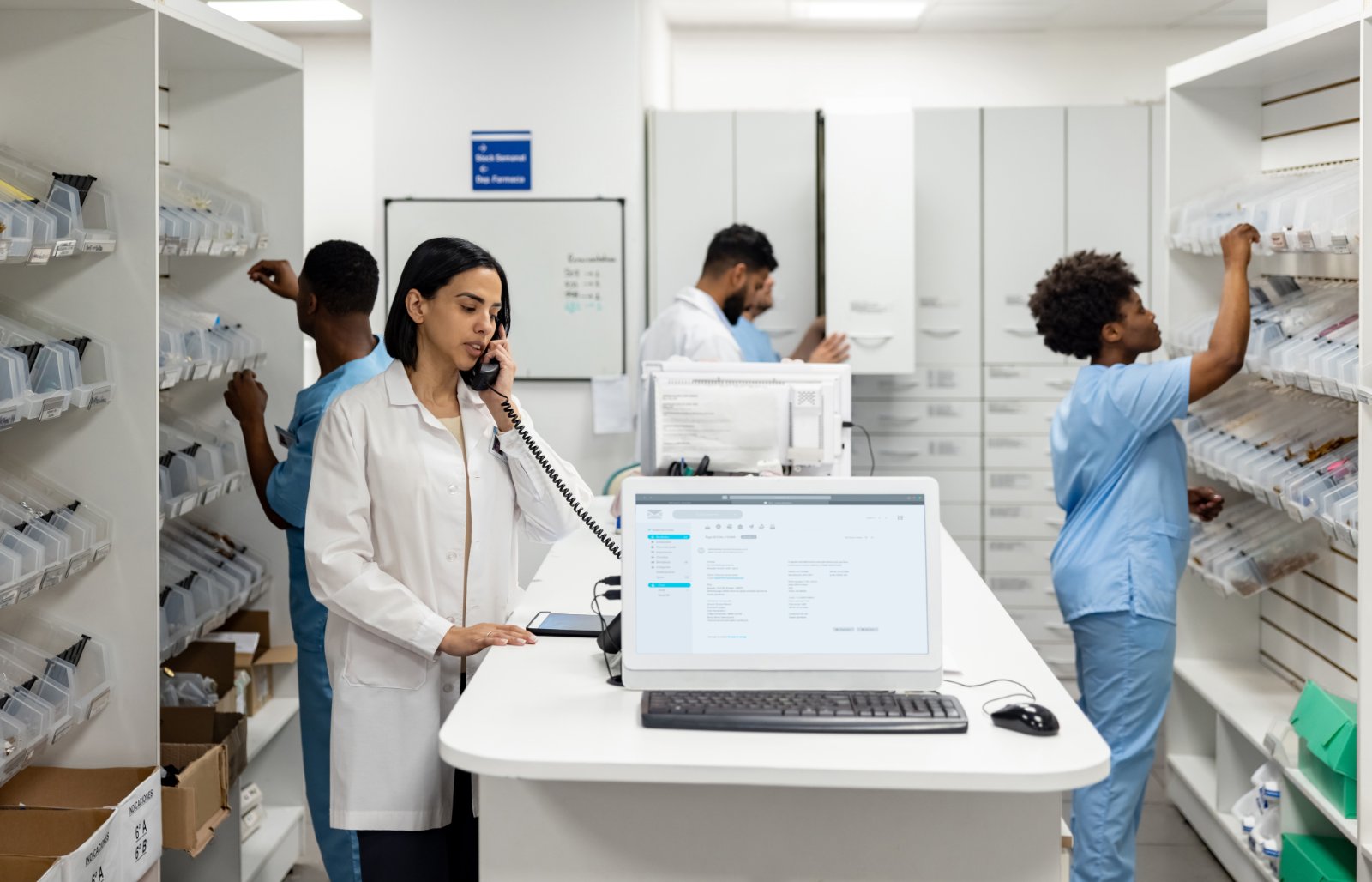
As IDS Pharmacists become more integrated into clinical care settings, their role continues to expand, especially within Phase 1 trials5 and specialized oncology service lines.6 In these environments, IDS pharmacists are uniquely positioned to support patients through medication education, drug-drug interaction assessment, and ongoing medication management. As such, the call for a decentralized model is inevitable to enhance accessibility to this expertise by embedding pharmacists directly within the patient care team,7 enabling real-time clinical decision support and proactive interventions. Through closer collaboration with physicians, nurses, and research staff, IDS pharmacists can help reduce medication errors, prevent protocol deviations, and improve both trial efficiency and patient outcomes. Additionally, this model may support institutional growth by increasing study capacity and strengthening operational performance.8
Despite these benefits, several gaps in implementing decentralized IDS services have been identified. Based on a national survey conducted by Khandoobhai et al., although key pharmacy services for clinical trials were well-defined, fewer than half were performed consistently in practice.9 Common barriers include limited time within current workflow, competing workload demands, insufficient funding and dedicated resources to support expanded roles
At our institution, efforts are underway to better quantify the impact of decentralized IDS Pharmacy services. We have been actively documenting metrics on pharmacist interventions in our Phase I oncology clinic to assess their value and support cost justification. IDS pharmacists in this setting often receive referrals for medication reconciliation to assess a patient’s eligibility for clinical trials. Additional activities include optimizing medication regimens, patient counseling, recommending supportive care medications, and assessing investigational drug-related toxicities. These interventions not only improve patient safety, but can help prevent toxicity, loss of efficacy, and protocol deviations. Furthermore, capturing the time spent on these interventions provides meaningful data to justify full-time equivalent positions. It is important to note that standardized benchmarks for IDS pharmacist activities in clinical settings are currently lacking. The complexity of investigational drugs often requires more extensive and time-intensive review compared to standard-of-care therapies, which may not be fully reflected in existing productivity metrics.
As the IDS resident, I had the opportunity to participate in a rotation within our Phase I oncology clinic, working closely with an interdisciplinary team that included physicians, advanced practice providers, nurses, and clinical research coordinators. This experience allowed me to actively contribute to patient care by assessing trial eligibility from a pharmacy perspective, identifying potential drug–drug interactions, and counseling patients on the safe use of investigational therapies. Through this role, I was able to follow patients longitudinally throughout their clinical trial journey, addressing medication-related issues related to comorbid conditions and supporting care during hospital admissions, while ensuring ongoing trial eligibility. This experience further highlighted the unique value IDS pharmacists bring, bridging clinical care with investigational drug management, and supporting both operational and patient-centered priorities.
Looking ahead, additional data collection, research, and benchmarking will be essential to further demonstrate the clinical and economic value of IDS pharmacists in decentralized models. This continued evidence generation will help support broader adoption of this approach, ultimately advancing the role of IDS pharmacy and improving care for patients participating in clinical trials.
References
- Markey N, Howitt B, El-Mansouri I, Schwartzenberg C, Kotova O, Meier C. (2024). Clinical trials are becoming more complex: a machine learning analysis of data from over 16,000 trials. Sci Rep.,14(1), 3514.
- Trends and Charts on Registered Studies (n.d.). ClinicalTrials.gov. Retrieved May 8, 2026, from: https://clinicaltrials.gov/about-site/trends-charts
- American Society of Gene & Cell Therapy (ASGCT). (April 2026). Gene, Cell, and RNA Therapy Landscape Report: Q1 2026 Quarterly Data Report. Retrieved May 11, 2026, from https://www.asgct.org/uploads/files/general/Landscape-Report-2026-Q1.pdf
- Leenhardt F, Alexandre M, Guiu S, Pouderoux S, Beaujouin M, Lossaint G, et al. (2021). Impact of pharmacist consultation at clinical trial inclusion: an effective way to reduce drug–drug interactions with oral targeted therapy. Cancer Chemother Pharmacol., 88(4), 723–9.
- Saunders J, Murli S, Rudek MA, Khandoobhai A, DeLisa A, Goodrich A, et al. (2022). Evaluation of Clinical Pharmacy Services for Phase 1 Clinical Trials. J Hematol Oncol Pharm., 12(3), 131–7.
- Moore SJ, Amerine LB. (2015). Integration of investigational drug services in an oncology service line. Am J Health Syst Pharm., 72(21), 1840–3.
- Baroody C, Sandler M, Hong C, Madanat YF, Conley S. (2024). Evaluation of a decentralized investigational drug service pharmacist in a cancer clinical trial infusion unit. J Oncol Pharm Pract., 30(7), 1200–6.
- Schmidt M, Lockhorst R, Middendorff G, Kirkpatrick TR. (2024). Defining Value in a Nontraditional Investigative Drug Service Pharmacy Model. J Hematol Oncol Pharm., 14(5), 165–71.
- Khandoobhai A, Poi M, Kelley K, Mirtallo J, Lopez B, Griffith N. (2017). National survey of comprehensive pharmacy services provided in cancer clinical trials. Am J Health Syst Pharm., 74(11_Supplement_2), S35–41.
About the Author

Annalisa Han is originally from China and earned her PharmD degree from the University of Toledo in Ohio. She completed her PGY-1 pharmacy residency at INTEGRIS Baptist Medical Center in Oklahoma City, Oklahoma. Following that, she began pursuing a Ph.D. in Clinical and Experimental Therapeutics at the University of Kentucky College of Pharmacy. Currently, she is taking a gap year from the program to complete a PGY-2 pharmacy residency in Investigational Drugs and Research at Mayo Clinic. Her professional interests include immunology and early-phase clinical development. Outside of pharmacy, she enjoys roller skating, spending time with her two cats, and exploring new cities and restaurants. She is excited to rotate in Vestigo and further explore Vestigo functionalities that could be implemented to support investigational drug services.